
Speaking with Confidence
Lesson 13: Prepared talks: notes, slides and rehearsal
Goal: prepare a five-minute talk from notes, with simple slides (or none), rehearsed out loud at least three times.
Notes, not a script
Reading a script word for word sounds like reading: flat pace, eyes down, no connection. Memorising every word is worse, because if you lose one line you lose the lot. The middle ground works best:
- Write it out once in full if that helps you think. Then put it away.
- Make a one-page outline: your message, your opening line, your two or three points with a few key words each, your closing line.
- Know the opening and the close by heart. Those are where nerves bite and where impressions are made.
- Use big text on cards or one sheet, numbered, so you can glance and find your place.


Slides: less is more
Slides should help the audience understand, not hold your notes. Research on how people learn from words and pictures together (Mayer, 2008) gives some clear rules. Good evidence from learning studies:
- Don’t read text that’s on the screen. People can’t read and listen at the same time; spoken words with a picture beat spoken words with the same words on screen.
- Cut anything that isn’t needed. Extra decoration, background music and interesting-but-irrelevant facts reduce what people remember.
- Put labels next to what they describe, not in a separate legend.
- Show one idea per slide, and reveal complex diagrams in steps.
In practice: a photo, a chart with one clear message, or a few words in big type. If a slide has more than about 20 words, it’s a document, not a slide; send it afterwards as a handout.
And you don’t always need slides. For a short talk, a toast, or a small meeting, none at all is often stronger.
Timing
People speak at roughly 130 to 150 words a minute in a prepared talk, with pauses. A five-minute talk is about 650 to 750 words, which is less than most people expect. Cut until it fits.
Running over is the most common mistake, and the most disrespectful to the audience and the next speaker. Speaking clubs use a timer with green, amber and red lights for exactly this reason. Do the same in rehearsal: plan to finish at 80 to 90% of your time, because nerves, laughter and pauses add time on the day.
Rehearse out loud
Thinking through a talk isn’t rehearsing it. Words that look fine on paper trip you up out loud.
- First run: out loud, alone, with your notes. Fix the bits where you stumble.
- Second run: timed and recorded on your phone. Watch or listen once. Cut what runs long.
- Third run: standing up, as close to the real thing as you can (the room, a friend as audience, or on a video call).
Watching yourself is uncomfortable but useful: most people look calmer on video than they felt (Lesson 2).
Borrow from actors
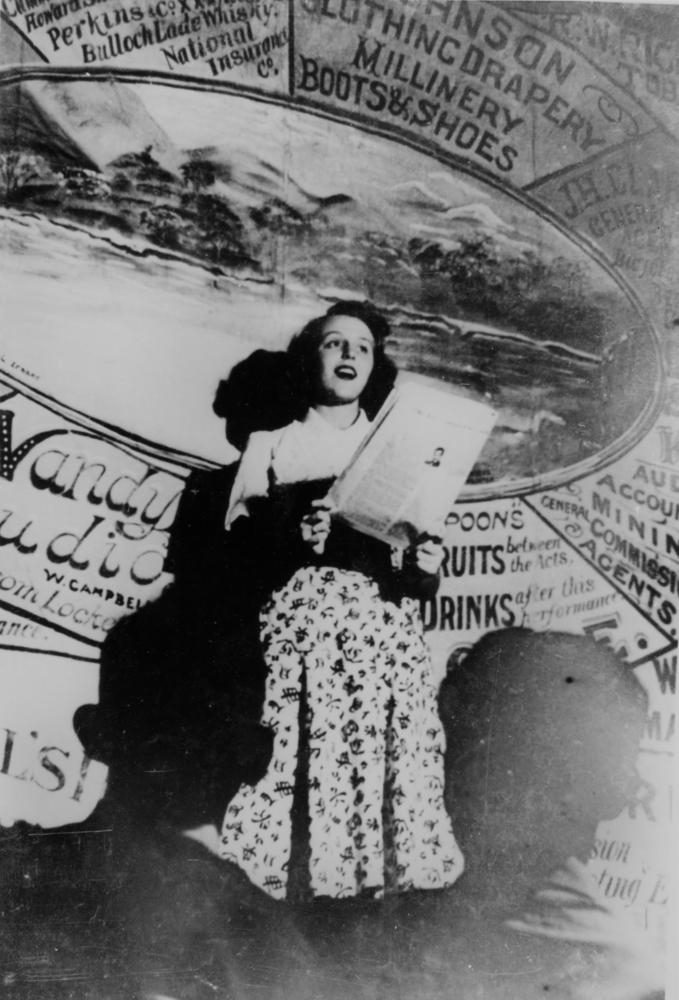
Actors have spent centuries solving the problems speakers face: remembering words, being heard at the back, staying natural on the hundredth performance, and handling nerves. A few of their habits translate directly. These are practitioner tips unless marked.
- Learn the meaning, not the words. Studies of how actors memorise found that the good ones don’t drill lines by rote. They work out what each line is for (what the character wants at that moment), and the words follow. People taught this way remembered more than people who just repeated the text (Noice and Noice, 2006). Some evidence. For a talk: know what each section is meant to do (make them laugh, worry, agree), and you’ll find the words on the day.
- Know your intention. Actors play an action, like “to warn” or “to reassure”, not a mood. Ask the same of each part of your talk, and your voice will change to match without you forcing it.
- Warm up. No actor goes on cold. Five minutes before you speak: roll your shoulders, yawn and stretch, hum, do some lip trills, and say a tongue twister slowly, then quickly.
- Plan your moves. On stage this is called blocking. Stand still for important points; move on transitions (“My second point…”); come forward for the personal story. Random pacing distracts.
- Open up to the audience. Actors cheat out: they angle their bodies towards the audience even when talking to someone beside them. Do the same when pointing at a slide or answering a question from the side.
- Hold the moment. After a laugh, a big line or a question to the room, wait. Actors let a moment land before moving on.
- Use the full range. An actor will happily whisper or boom when the scene calls for it. Try both, on purpose, in rehearsal; you’ll find your range is wider than you use.

On the day
- Arrive early. Check the room, the screen, the clicker, the microphone.
- Have water nearby.
- Do your breathing and your “I’m excited” (Lesson 2).
- Find a few friendly faces in the audience and start with them.
Exercise 13
Prepare a five-minute talk on something you know well: your job, a hobby, a place you love. Build it on one card (Lesson 6). Rehearse it three times as above, recording the second run. If you use slides, use no more than five, with no bullet points.
Sources
- Noice and Noice (2006), What studies of actors and acting can tell us about memory and cognitive functioning, Current Directions in Psychological Science
- Mayer (2008), Applying the science of learning: evidence-based principles for the design of multimedia instruction, American Psychologist
- Harvey et al. (2000), Social anxiety and self-impression: cognitive preparation enhances the beneficial effects of video feedback, Behaviour Research and Therapy