
Jazz Piano for Classical Players
How to use this course
This course is for people who had piano lessons as a kid, can still read music, and had a teacher who expected every note on the page, played exactly as written. Then you heard jazz as an adult and wanted in.
Good news: you’re further along than you think. You can read, your hands work, and you already know scales and triads. What you’re missing isn’t talent. It’s permission, plus a few tools that jazz players use to turn a one-line chart into a full-sounding performance.
Fourteen short lessons take you from reading a lead sheet to playing a real jazz standard with your own voicings and a bit of improvising. Each lesson takes 15 to 20 minutes to read and play through, and ends with an exercise for your next practice session.
How to work through it
- Lessons 1 to 4 are the foundation: what’s different about jazz, seventh chords, the two-note “shell” voicings that make everything easier, and the ii-V-I progression that holds most jazz tunes together.
- Lesson 5 is swing. Classical training makes your eighth notes too even and too polite. This fixes that.
- Lessons 6 and 7 are where it starts to sound properly jazzy: rootless voicings (the Bill Evans sound) and the “colour” notes: 9ths, 13ths and altered chords.
- Lessons 8 and 9 are the blues and improvising: a 12-bar blues you can play anywhere, and a step-by-step way to make up lines without freezing.
- Lesson 10 is the fun one: a bag of tricks and shortcuts that sound much harder than they are.
- Lesson 11 puts it all together on a real tune, “Autumn Leaves”.
- Lessons 12 and 13 are extras: singing while you play, and setting up a drum machine as your rhythm section.
- Lesson 14 is a practice plan and where to go next.
Lesson 15 is a one-page quick reference to keep on the music stand, and Lesson 16 is a glossary.
How to read the examples
There’s very little notation in this course. That’s deliberate: the point is to get you thinking in chords and shapes rather than reading dots. Notes are written as letter names, lowest note first, so C E G B means play C, then the E above it, then the G above that, then the B above that. “LH” is left hand, “RH” is right hand. Keyboard diagrams show the important shapes, and Lesson 11 has a little sheet music.
Tap any chord symbol in a lesson, such as Dm7 or G13, to pop up its notes, a mini keyboard and the voicings from Lessons 3 and 6. Handy when you’ve forgotten what a chord is.
Middle C is the C nearest the middle of the keyboard. When a lesson says “around middle C” it means within about five notes either side.
Flats are written with a lower-case b (Bb, Eb) because that’s how chord charts and apps write them.
What you need
- A piano or keyboard. A digital piano with 88 weighted keys is ideal, but 61 keys is enough for everything here.
- A metronome (any free phone app) or, better, iReal Pro, which plays bass and drums behind you. Lessons 13 and 14 have more options.
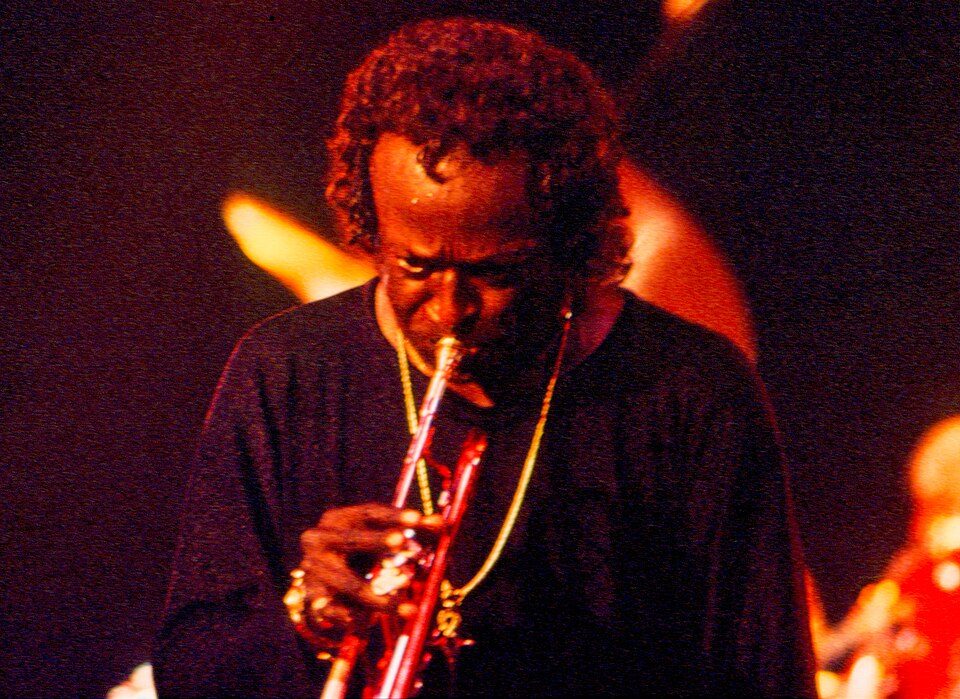
- A few albums to listen to. Start with Miles Davis, Kind of Blue (1959), Bill Evans Trio, Waltz for Debby (1962), and Oscar Peterson Trio, Night Train (1963).
A note on “wrong” notes
Your old teacher was right about Chopin: the notes on the page are the piece. In jazz the lead sheet is a starting point, and everyone plays it differently, every time. A note that clashes is only wrong if you leave it hanging. Move it a half step up or down and it becomes a passing note. You’ll see that idea again and again in this course.

Exercise 0
Put on “So What”, the first track of Kind of Blue. Listen to how little the piano (Bill Evans) actually plays: two-chord answers to the bass, then lots of space. Then sit at the piano and, by ear, try to find the bass line that opens the tune. Don’t worry if you only get part of it. That’s your first time playing jazz without a score.