
Jazz Piano for Classical Players
Lesson 10: Tricks and shortcuts to sound cool
Goal: add a handful of tricks to your playing that sound impressive and take minutes, not months, to learn.
These are the little moves jazz pianists reach for to make a simple tune sparkle. None of them needs advanced theory. Learn one or two a week and drop them into the tunes you already play. Most examples are in C so you can find them quickly; move them to other keys once they’re in your hands.
1. The slide
Slide a finger off a black key onto the white key next to it. Over a C chord, slide from Eb to E with the same finger (usually the 2nd or 3rd), fast, so the Eb is a blur. That’s the minor 3rd sliding into the major 3rd: the most basic blues sound there is.
Do it at the start of a melody note, at the top of a chord, or on the last chord of a tune. Where you’ve heard it: every blues and gospel pianist ever.
2. The So What voicing
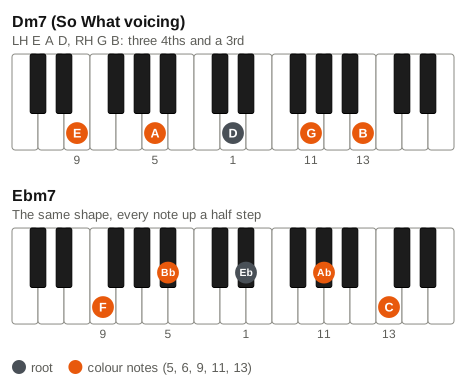
Five notes, stacked in fourths with a major third on top. Over Dm7:
LH E A D, RH G B
Bill Evans played it on Miles Davis’s “So What” (1959) and it instantly sounds modern. The trick: keep the shape and move it. Shift every note up a half step (F Bb Eb Ab C) and you have Ebm7, which is exactly what happens in the tune when it moves from D minor to Eb minor. Or keep to the white keys and slide the shape up and down by step over a D minor vamp. The intervals shift slightly as you move, which is fine.
3. Quartal chords
Related idea: build chords from fourths instead of thirds. LH plays an open fifth on the root (D A); RH plays three notes a fourth apart (G C F, or A D G) and moves them up and down the scale in parallel. That’s the McCoy Tyner sound from John Coltrane’s 1960s quartet. Big, powerful and very easy.
4. The tritone substitution
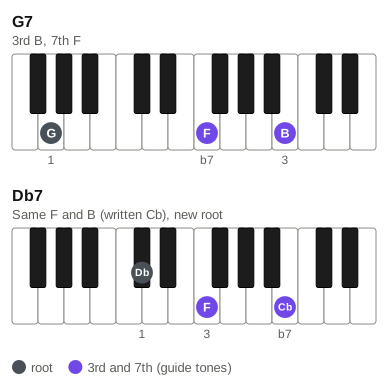
Any dominant 7 chord can be swapped for the dominant 7 a tritone (three whole steps) away. So in a ii-V-I in C, replace G7 with Db7:
Dm7 → Db7 → Cmaj7
Why it works: G7’s guide tones are B and F. Db7’s guide tones are F and Cb (which is B). Same two notes, different root. And now the bass slides down chromatically, D, Db, C, which sounds very sophisticated.
Shells: Dm7 D F C, Db7 Db F B, Cmaj7 C E B. Look how little moves.
5. Side-slipping
Before landing on a chord, play the same voicing a half step higher for a moment, then slide down into the real one. For Cmaj9 (LH E G B D), play F Ab C Eb on the “and” of 4, then E G B D on beat 1.
It works from a half step below too. It’s an instant “how did they do that?” moment, and it’s just your hand moving one key.
6. Block chords (locked hands)
George Shearing’s signature sound from the late 1940s, also loved by Red Garland and Oscar Peterson. Play the melody in both hands an octave apart with a chord filled in between, so the whole chord moves with the tune.
- Melody C over a C chord: RH E G A C (C6 under the melody), LH C an octave below the top C.
- When the melody hits a note that’s not in the chord, use a diminished 7 chord under it instead. Melody D: RH F Ab B D, LH D.
Alternating C6 and diminished chords like this harmonises a whole scale. Play a C major scale up and down in block chords (C6 on C, E, G, A; diminished on D, F, B) and it sounds like a big band.
7. Octave melodies
For a melody to stand out (end of a solo, last chorus), play it in RH octaves, and drop a chord tone in the middle under your thumb. Red Garland and Oscar Peterson made this a trademark. It’s loud, clear, and sounds like you’re having a great time.
8. The gospel “amen”
Hold C in the bass and play an F major triad over it (F A C, then back to C E G). That’s the IV-to-I “amen” cadence from church music, and played with a bluesy roll it makes any ending feel soulful. Add the slide from Trick 1 on the E.
9. Intros: steal the ending, or vamp
Two easy intros:
- The last four bars. Play the tune’s last four bars as an intro. Most turnarounds lead straight back to the top. Simple and professional.
- The I-vi-ii-V vamp. Loop Cmaj7 A7 Dm7 G7 (one or two beats each) until you’re ready, then start the tune. With the tritone sub from Trick 4: Cmaj7 Eb7 Dm7 Db7, with a bass line sliding down chromatically.
10. The tag ending
At the end of a tune, instead of stopping on the last chord, repeat the last ii-V three times. Play the last four bars, but as you’d land on the final C, swerve to Em7 A7 Dm7 G7 (iii-VI-ii-V) and loop it. On the third time, finally resolve. Every jazz audience recognises it and knows to clap at the end.
11. A cool final chord
The final chord of a tune doesn’t have to be plain C. Try:
- C6/9: LH C G, RH A D E. Warm, open, finished.
- Cmaj7(#11): LH C E B, RH D F# A. Floats away.
- The flat-two approach: play Dbmaj7 (LH Db F C, RH Eb G) then slide down a half step to C6/9. It’s a cousin of the tritone substitution (Trick 4): the chord a half step above home, sliding down.
12. The roll
On ballads, instead of hitting a big voicing all at once, roll it from the bottom up like a harp, quickly, with the sustain pedal. Spread a rootless voicing in the left hand and an upper structure triad in the right (Lesson 7). With a little rubato, you’ll sound like you’ve been playing in hotel lounges for years. Use it sparingly or it turns to syrup.
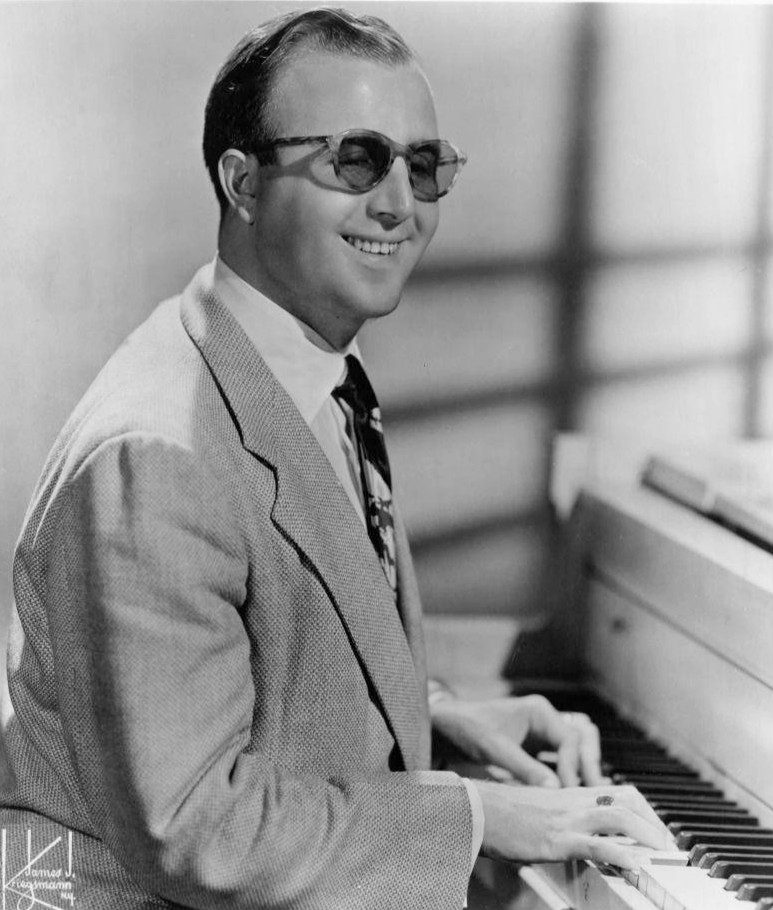
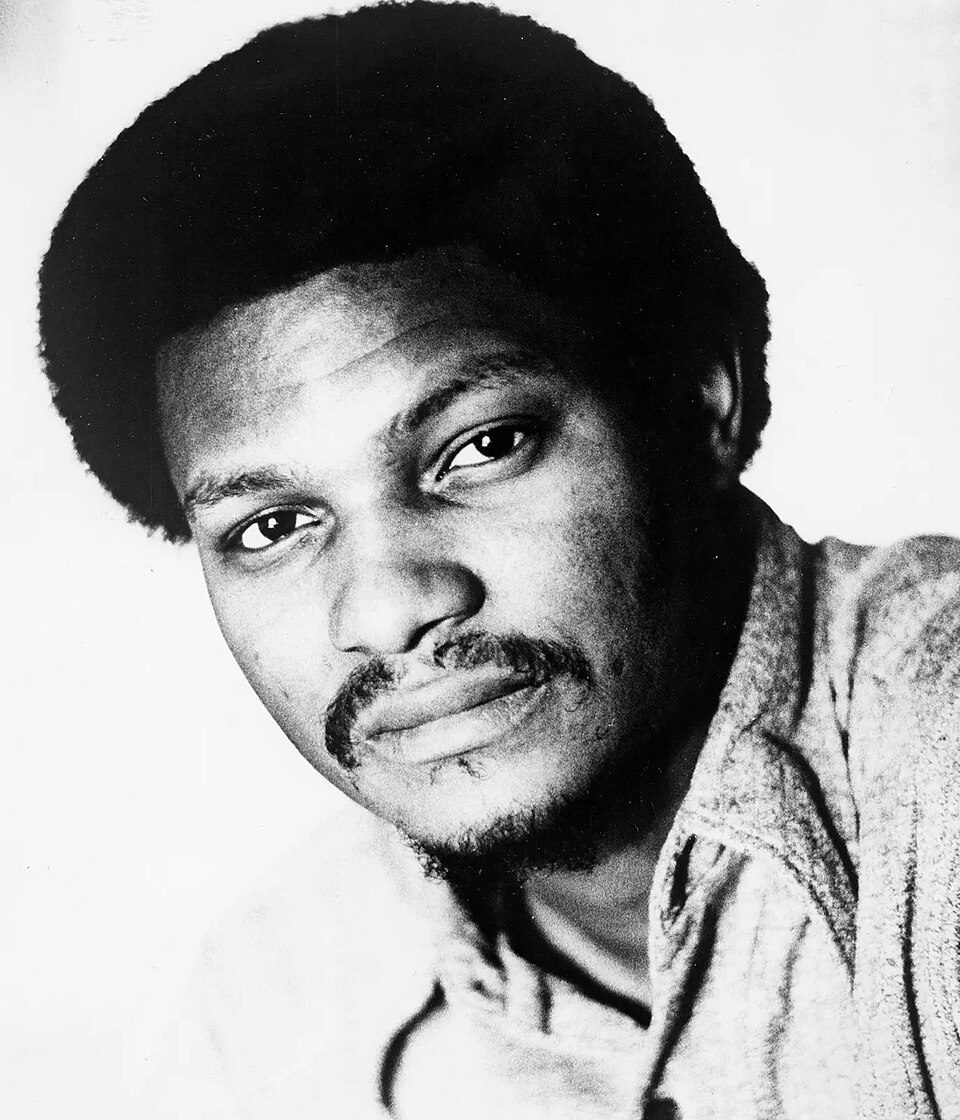
Three of the players behind these tricks:




Exercise 10
Pick one tune you can already play (the ii-V-I sequences from Lessons 4 and 6 are fine if not). Play it three times. First time: intro from the last four bars, plain voicings. Second time: add the tritone sub and side-slipping wherever there’s a V chord. Third time: block chords on the melody, then the tag ending and a C6/9 to finish. Record all three and listen back.
Sources
- Mark Levine (1989), The Jazz Piano Book, Sher Music, chapters on So What voicings, block chords and tritone substitution
- Jazz Tutorial, The ‘So What’ voicing by Bill Evans
- Wikipedia, Tritone substitution and Block chord
- Recordings: Miles Davis, “So What” (1959); George Shearing Quintet, “September in the Rain” (1949); John Coltrane, A Love Supreme (1965) with McCoy Tyner